
River Story
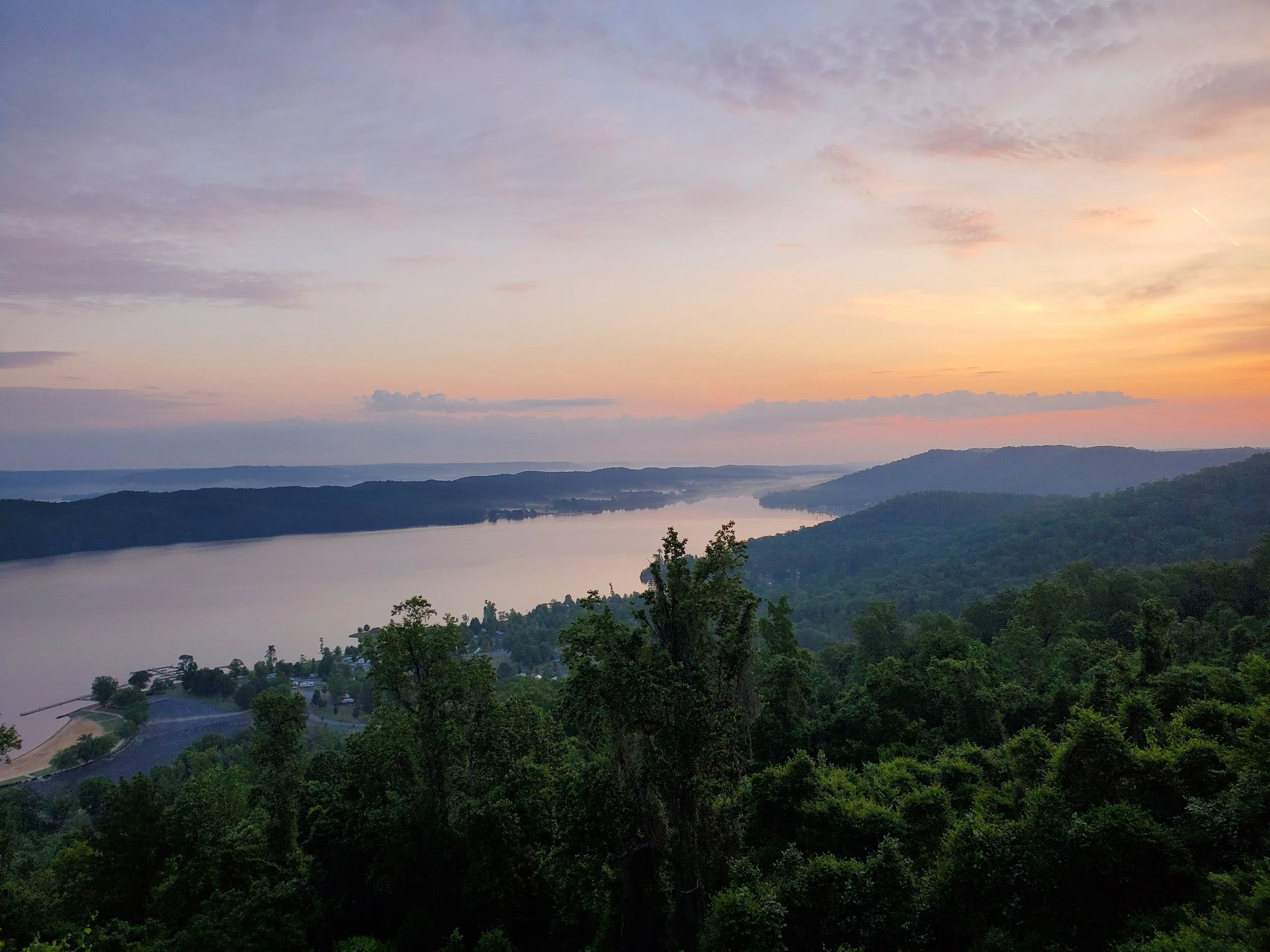
The Tennessee River stretches 652 miles through four states, shaping communities, ecosystems, and economies along its course.
As a first step in developing the Planning + Design Guidelines, the team compiled an Existing Conditions report that explores the river’s history, culture, ecology, management, recreation, demographics, and economic roles, revealing how its past and present are deeply intertwined.
River Story / 01
River as a Way of Life
For millennia, Indigenous peoples lived along the river, until forced removals like the Trail of Tears reshaped the region.
Later, the river played roles in the Civil War and 20th-century modernization through the Tennessee Valley Authority (TVA), whose dams redefined not only the river’s flow but also the social and economic development of entire communities.

History along the river
View full-size graphicThe Tennessee River has been an anchor for settlement throughout the region for the past 8,000 years. It has served as the backdrop to the development of unique cultures and traditions, and as the stage for pivotal historic events.

The Tennessee River Gorge
View full-size graphicThroughout time, the river has carved its way through ridges and valleys to form the course we know today.

Blythe Ferry
View full-size graphicFrom early Indigenous stewardship by Cherokee, Chickasaw, and Creek nations to colonial conflicts and forced removal, the Tennessee River Valley’s history reflects centuries of cultural exchange, displacement, and shifting patterns of control.

Decatur and Reconstruction
View full-size graphicDuring the Civil War, the Tennessee River was a strategic corridor for transport and warfare, hosting major battles like Shiloh and Chattanooga that solidified Union control of the South and devastated regional cities.

Wilson Dam and the TVA
View full-size graphicThe creation of the Tennessee Valley Authority in 1933 transformed the region’s economy and ecology, turning the river into a managed system for power generation, flood control, and rural development.
River Story / 02
From River To Reservoir
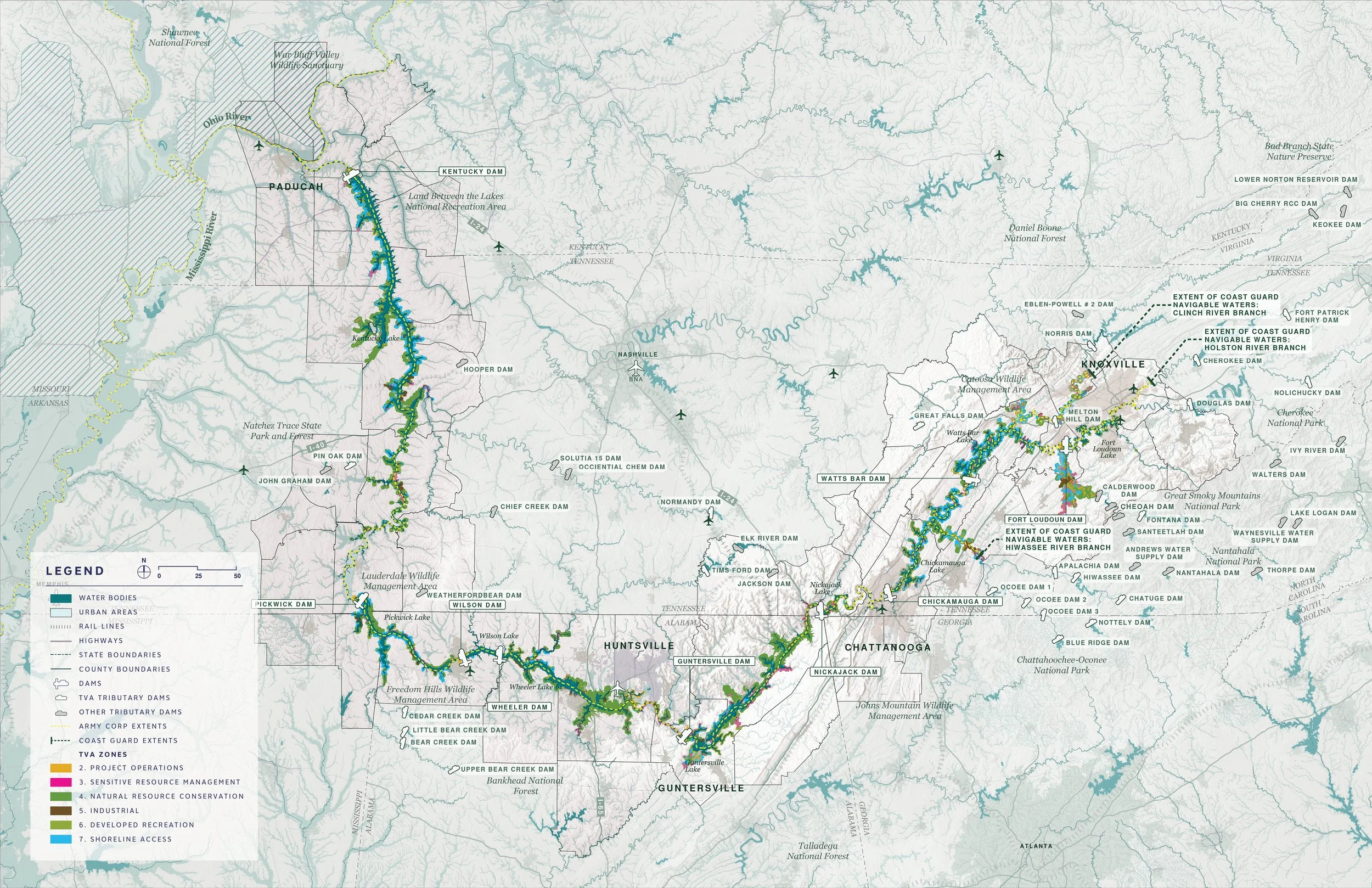
Management of the river today is shared by the Tennessee Valley Authority (TVA), state and federal agencies, and private landowners, finding a delicate balance between energy production, navigation, ecology, flood control, and recreation.
These overlapping jurisdictions pose both challenges and opportunities for coordinated planning, especially as environmental, energy, and recreation pressures evolve.
Managing the river
View full-size graphicToday, the river functions as a complex network that provides hydropower, flood control, and recreational access across hundreds of thousands of acres of managed TVA land.
Public lands along the river
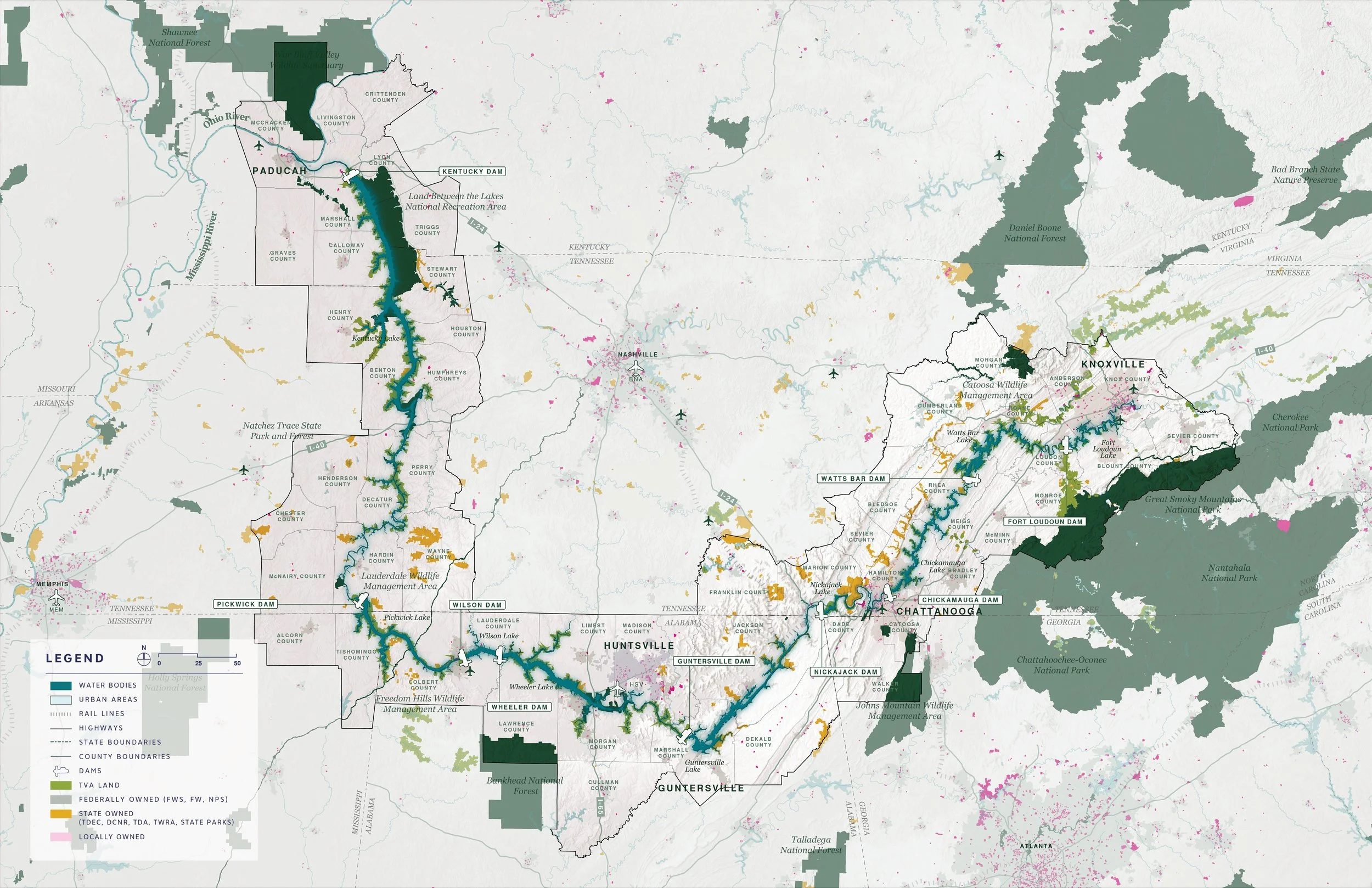
View full-size graphicBeyond TVA holdings, the Tennessee River Valley includes a diverse array of local, state, and federal public lands that connect communities to the river and its tributaries.
Nine reservoirs, one river
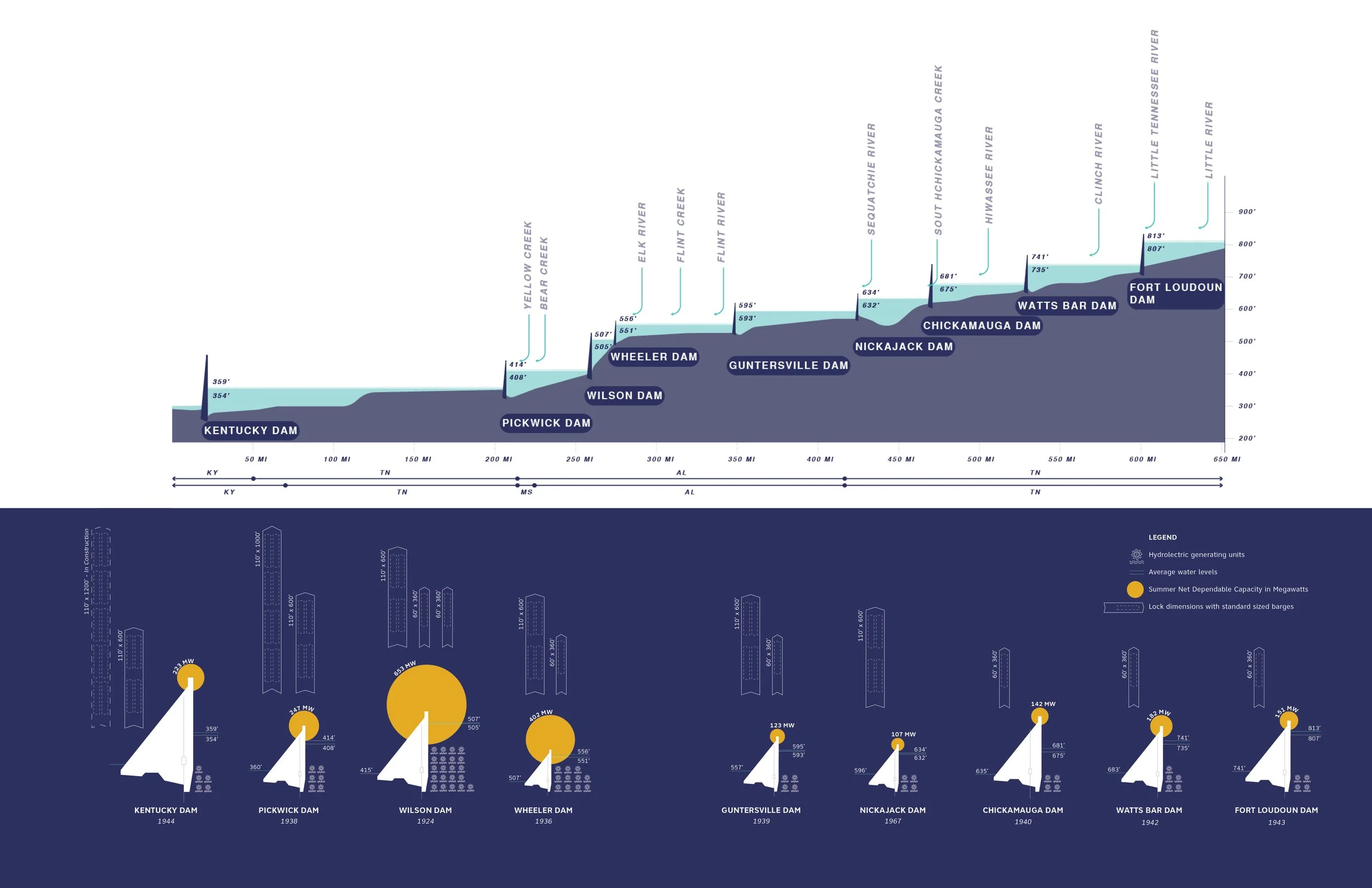
View full-size graphicThe Tennessee River today is made up of a series of nine reservoirs, each with its own character and landscape, forming a sequence of distinct yet interrelated lake environments.
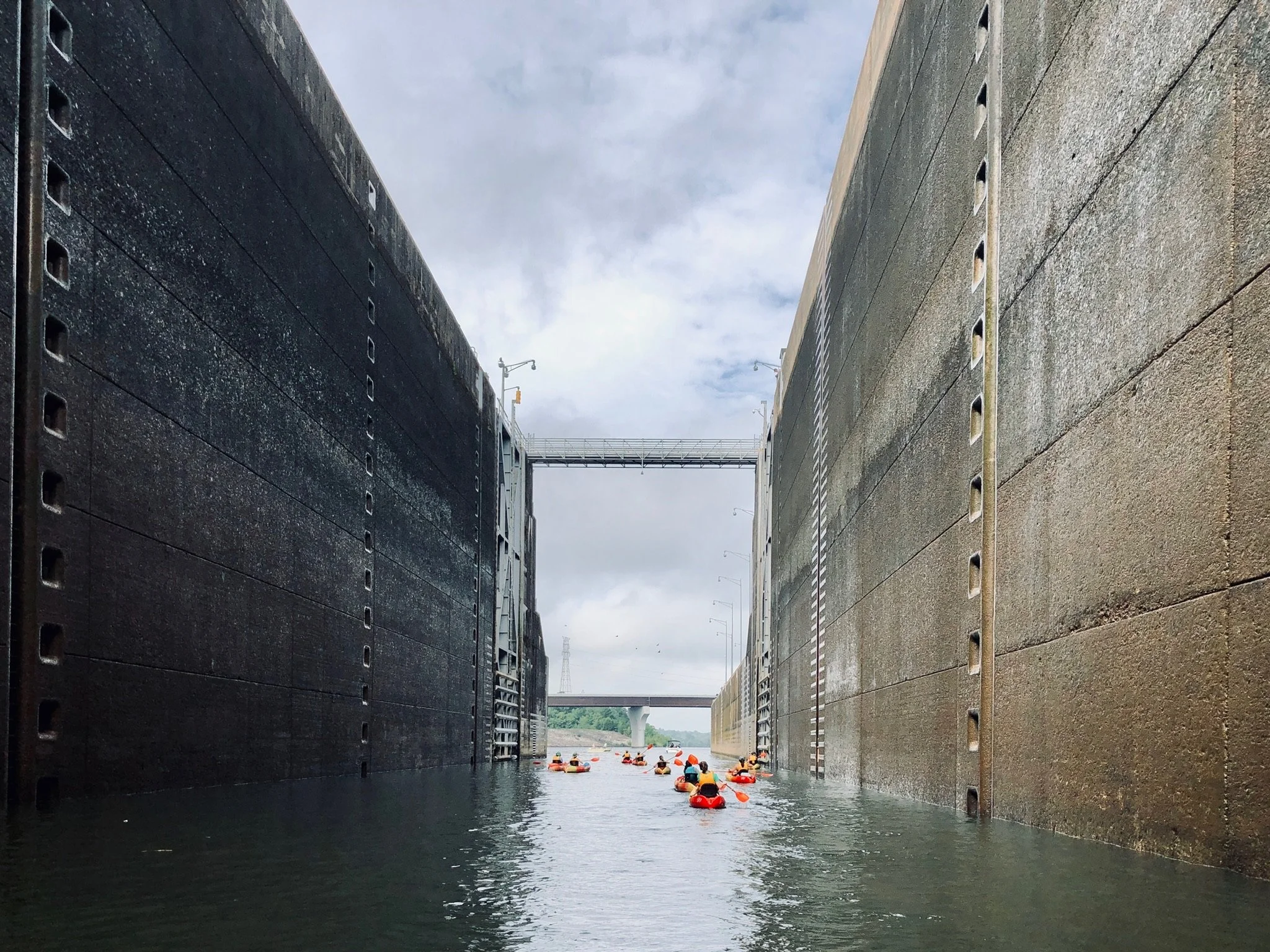
Recreation on managed waters
View full-size graphicThese reservoirs have become hubs for recreation- places where people fish, paddle, and explore the river’s changing waters.
River Story / 03
A Fragmented River Basin
The Tennessee River Basin is one of the world's most ecologically rich regions, hosting unique species across varied landscapes from mountains to wetlands.
However, the shift to dam-controlled reservoirs has altered ecosystems. Some species have adapted to these lacustrine environments, while others have declined due to habitat fragmentation, pollution, invasive species, and disrupted hydrology.

A mosaic of habitats
View full-size graphicThe Tennessee River system forms a diverse mosaic of terrestrial and aquatic habitats that vary dramatically in topography, vegetation, and species richness.

Ecological sensitivity
View full-size graphicThe Ecological Sensitivity study highlights conditions and vulnerabilities across the river system, offering guidance to balance biodiversity and resilience with future shoreline development and community access.
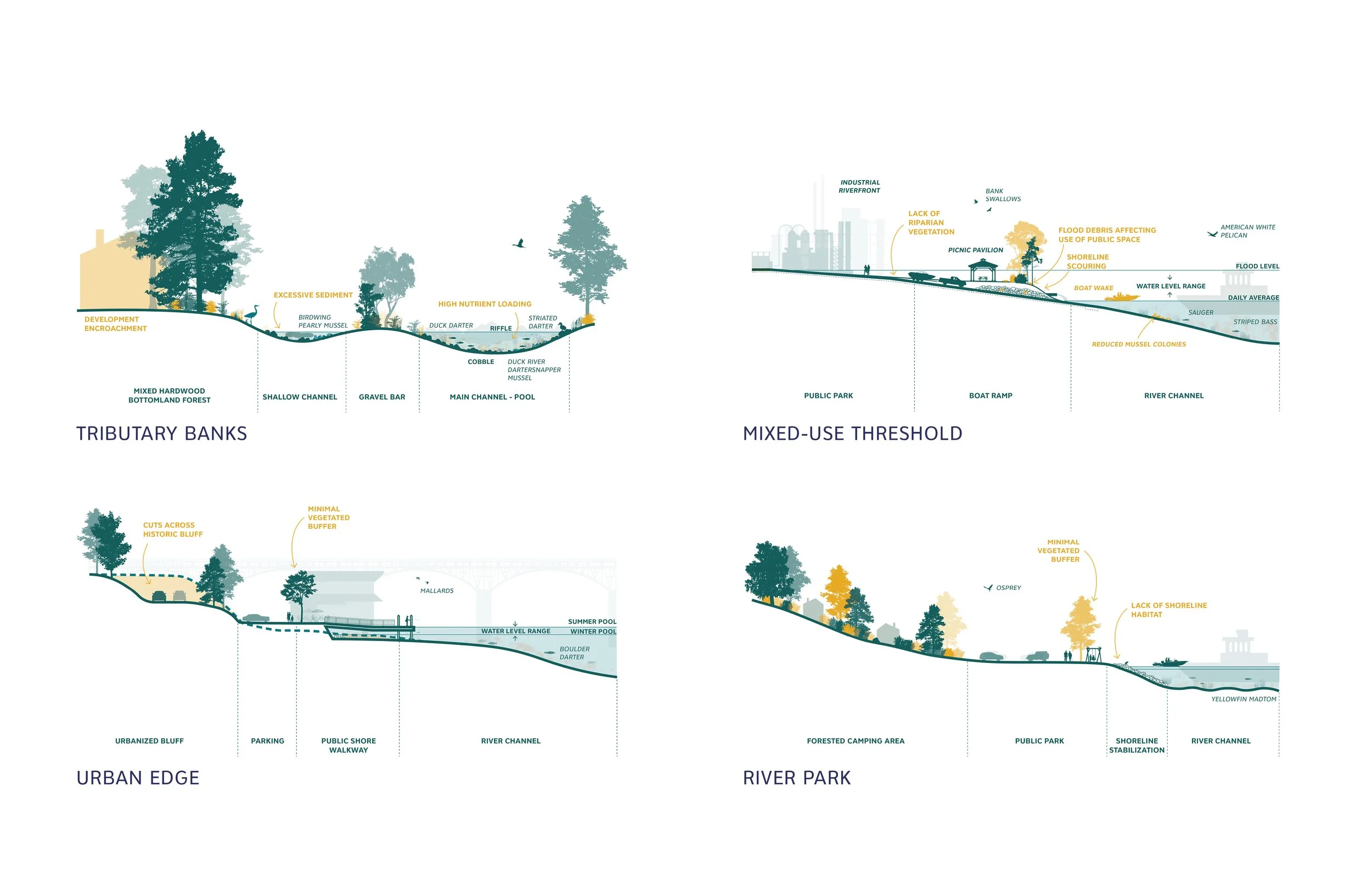
Changing river edges
View full-size graphicThe construction of dams shifted the river’s natural riparian edge upward, replacing lowland habitats with upland ones and creating a significantly altered and stressed river corridor.

Above and below Wilson Dam
View full-size graphicDams, by their nature, disrupt the flow of water through the system and disconnect aquatic communities, though strategies have been implemented to mitigate ecological impacts.
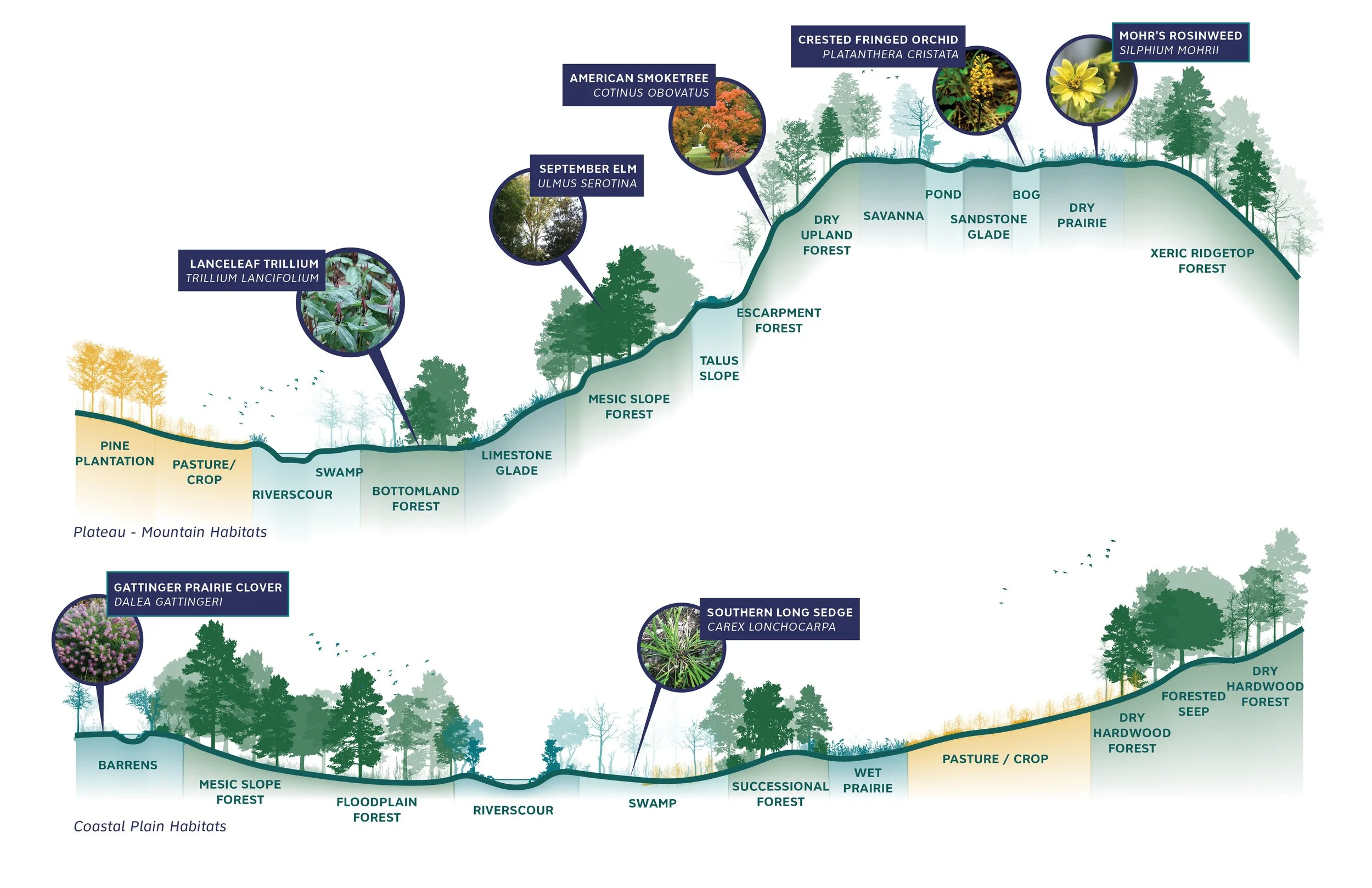
Habitats of the river valley
View full-size graphicBeyond its riparian edge, the river valley unfolds into layered upland and lowland ecosystems, forming one of the most ecologically diverse landscapes in the region.
River Story / 04
The River as Park
The Tennessee River is both a vital economic corridor and a recreational destination, but access varies greatly along its reach.
While some stretches support well-developed recreational economies, others remain underutilized or inaccessible due to shoreline privatization, lack of infrastructure, or environmental degradation.
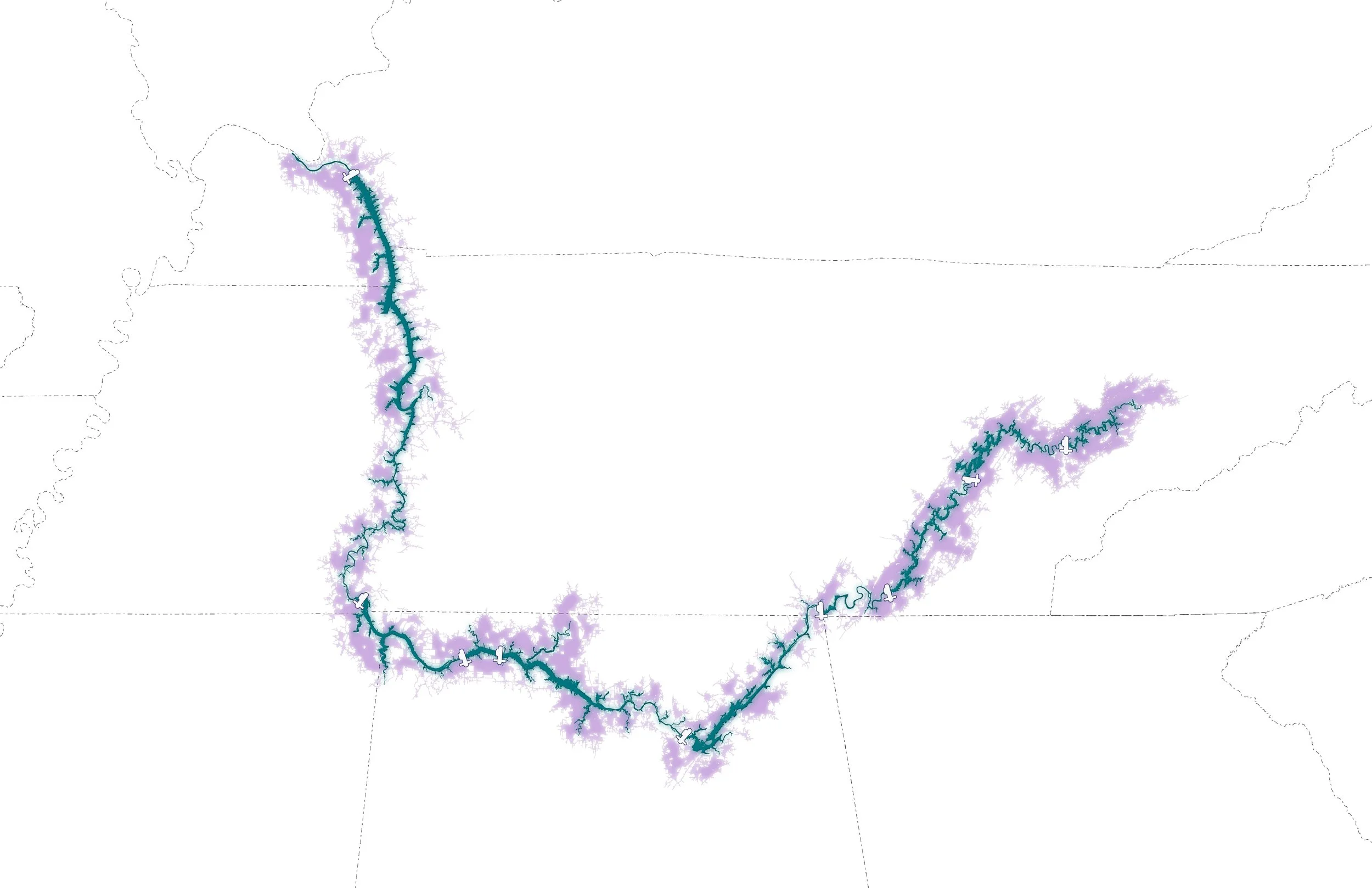
Reaching the river
View full-size graphicToday, the river offers a range of access points, though these opportunities are not evenly distributed.
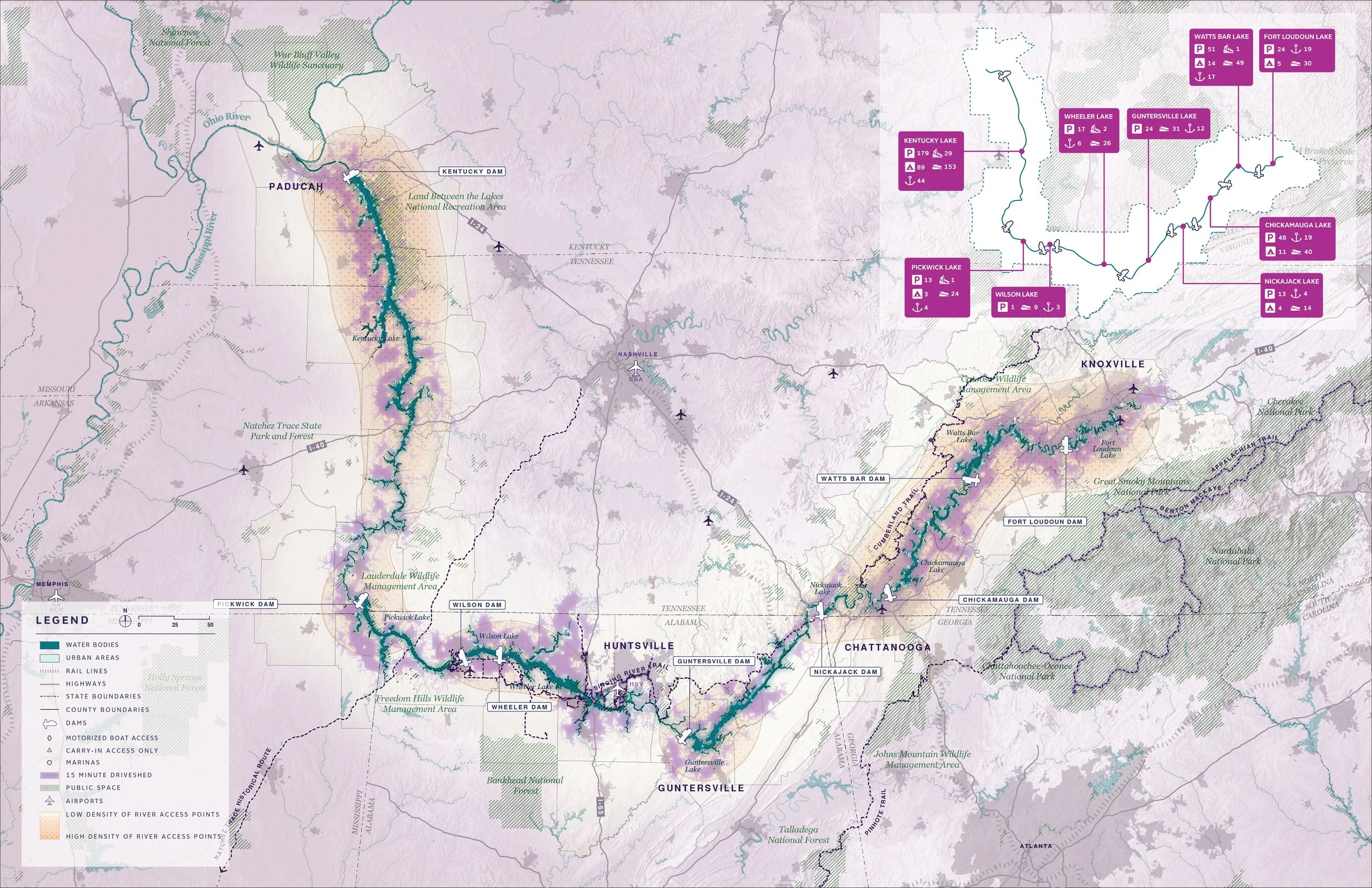
Access across the region
View full-size graphicTo understand how people actually reach the river- and where access remains limited- the team studied the region’s driveshed network.

Ways to experience the river
View full-size graphicThe team also examined different typical types of access and their distribution across the region by mapping concentrations within each lake segment.
River Story / 05
A Delicate Balance at Risk
Pollution, aging infrastructure, and legacy land-use decisions create uneven environmental risks across the basin.
Without coordinated resilience strategies, communities and ecosystems remain vulnerable, but basin-wide planning could unify restoration, infrastructure, and health goals.

Heat and flood exposure
View full-size graphicThe Tennessee River is a complex, highly managed system facing mounting pressures as environmental conditions across the region continue to evolve.

A changing climate
View full-size graphicRising heat and more frequent flooding are expected to intensify these challenges in the years ahead, with many impacts already visible today.

Pollution and industrial legacies
View full-size graphicAt the same time, many tributaries remain impaired by historic contamination, while the river itself is under constant strain to supply drinking water, buffer increasingly intense floods, and sustain recreation and habitat.